
Kick-off
OK, let us get one thing straight, audits do not add value. Neither do findings. The value comes from the actions on those findings. So, no matter how much work you do, reporting, writing nonconformities etc., if they are not relevant, written in context, meaningful or even agreed with, they are unlikely to gain traction, and your entire effort will have been wasted. There!
The only upside, which some believe is the only reason for the internal audits in the first place is the 3rd party auditor will likely tick it off their checklist, because you have done it.
But what did you gain? Absolutely b*****k all, apart from a small step towards that certification.
The truth
The standards say, ‘do them’, Like ISO9001 for example. For ISO9001, it is a required, ‘shall’.
So, many companies create an audit schedule. This is several audits, say over a year, and cajole, ahem! ‘willing’ volunteers, internal auditors, into becoming the eyes and ears of the company, to the end of, very sadly satisfying the auditor when they come on their surveillance or recertification audits.
That is the truth of it. ‘The standard says’. ☹
Also, “our customer may want to know about it, so we’d better get on and do them”.
Direction
What if we changed the focus of the audit? Yes, we still tick the required boxes and meet the standard requirements, but we also highlight the areas where processes are creaking and could be improved. In short, we use audits to uncover value-adding opportunities.
Now we are getting somewhere.
Senior managers should know
For our audits to deliver something tangible, we need support and we need it from the top. From our senior people who are invested into the whole internal audit scheme.
We need managers that understand ‘what internal audits can achieve’. Many do not.
We need managers that understand, ‘we are not trying to catch anyone out’. Many do not.
They also need to be aware, it is they, that will make or break the process through their support, or lack thereof.
First, somebody needs to show the managers what internal auditing can do. Some already know, and support, that is OK, but many do not and have to be educated. If that can be achieved that is great. You have a chance. However, if they,
- Insist they ‘already know’
- Cannot be persuaded, when it is obvious, they do not know, or
- Don’t believe it has anything to do with them, saying “leave it to quality”,
you’re in trouble
I would not personally work with anybody on the internal audit programme without that support.
How to find the value
If the internal audit programme has that vital support, perhaps try some of the ideas below to turn the findings into value adding changes and get improved outcomes for the whole audit process.
- Opening meeting
- Even having a small meeting of just a few minutes, gives you the opportunity to highlight your desire add value as you conduct the internal audit. We are not just here to highlight the bad stuff.
- Don’t forget effectiveness checks during the internal audit
- It is common and expected, even encouraged, to check for conformance during the internal audit but we must not forget about checking process measures, outputs, objectives or effectiveness. These elements are designed to monitor the process, and we need to know if the process is working. What are the trends like? What are the targets and goals? Is the process on track? Have any targets moved in line with change? Oh! I found a document that was out of date. OK, that can happen, may mean something. Oh! The process efficiencies have been off target for the past 2 months without actions? Now that is worth reporting. Addressing that could add so much more value!
- Insisting improvement opportunities are agreed mutually and addressed.
- It is pointless highlighting something to be consigned to the meh! section. Nonconformities, fair enough, they require action but all other findings are often conveniently added to the ‘who cares’ pile of work.
- I never raise an opportunity for improvement that hasn’t been clearly explained, communicated and agreed with the auditee.
- Now, both parties are in agreement, the opportunity ‘will’ be addressed.
- Measure a reason for change as a ‘Cost Of Poor Quality’
- The cost of poor quality for a given finding, should not recur if the finding is effectively closed. It should be a one-time event. That goes for nonconformity and improvement opportunities. Unfortunately, it is going to cost something to put things right, but we have prevented recurrence in many cases. So, the cost of poor quality, is partly the cost of putting things right, and, also, some of the prevention costs. It takes resources to make changes. Measuring this, will truly highlight the cost of change. Cost of poor quality is not just the scrap, rework or remake costs. It’s not just the cost to change the quality management system. It should not be limited to product.
- Cost of quality should include as a minimum:
- The costs associated with the reinspection or testing of any items or elements of the quality system that that required containment. The components you found unidentified, the documents that weren’t revision controlled, the inspection equipment that was in use but not part of the identification and calibration system. Yes, we could have avoided those costs had we not found them, but we did find them, they need addressing and it is not a free process. Now the process is tighter and nobody else will find the same issues. Less painful than if a customer or 3rd party auditor raises them. Work out the value and claim it as cost of poor quality. It shouldn’t come back if manged well. Add in the time taken to conduct any problem-solving meetings. It is easy to rack up £100s when a team analyses problems and offers solutions. Time to create a new product router. Often changes are required to reproduce parts initially created in error and related to internal audit findings. Cost to replace any parts involved in internal audit findings. Cost to create newly agreed process documentation. Cost to retrain personnel to newly agreed processes. New tooling and equipment costs.
- There are other costs of poor quality. Sit down and think what some of them are after your next audit.
- The costs associated with the reinspection or testing of any items or elements of the quality system that that required containment. The components you found unidentified, the documents that weren’t revision controlled, the inspection equipment that was in use but not part of the identification and calibration system. Yes, we could have avoided those costs had we not found them, but we did find them, they need addressing and it is not a free process. Now the process is tighter and nobody else will find the same issues. Less painful than if a customer or 3rd party auditor raises them. Work out the value and claim it as cost of poor quality. It shouldn’t come back if manged well. Add in the time taken to conduct any problem-solving meetings. It is easy to rack up £100s when a team analyses problems and offers solutions. Time to create a new product router. Often changes are required to reproduce parts initially created in error and related to internal audit findings. Cost to replace any parts involved in internal audit findings. Cost to create newly agreed process documentation. Cost to retrain personnel to newly agreed processes. New tooling and equipment costs.
- There will also be opportunities to improve the audit process itself, which in turn adds value as the auditor is freed up for other activities. Time your whole audit process. Seriously. It is indirect, so we never count it. The prep, the audit, the report, the nonconformity writing, the nonconformity follow-up and all the other ‘forgotten’ elements of waste e.g. waiting, motion, over-processing. You’ll be amazed.
- You think you spent 2 hours for the whole audit process. Guess what, it was 4. 22 audits done in one year at 4 hours each. Not uncommon figures. What if you follow the lead of production and see how to reduce the 4 hours but still achieve the audit objectives. Maybe use a tablet to record your audit straight to the cloud. Reports then just need a quick tidy up. I just saved 40 minutes. That’s 10%. Sell it! The production manager may be interested to see you’re treating the internal audit as a ‘process’. Practice what you preach.
- Consider having a quality objective related to the internal audits. Why not, production will have theirs. I know, I know. Isn’t that dangerous Alan. I do not want the internals audits chopped or undervalued, that would be the opposite of what we want to achieve. It could though, help keep the internal audit process focused.
- The number of nonconformities found during auditing is not a measure of success. If you conduct an audit and highlight a group of nonconformities or announce 20 nonconformities found during the audit programme cycle, it is no big deal, especially when they are low risk. The internal audit also found a single mutually agreed opportunity for improvement, that suggested a full review of all process objectives. That was a huge finding and resulted in significant savings.
- Closing meeting
- Like the opening meeting, a short time spent relaying and agreeing your findings can summarise which items require addressing and allow you to remind the auditee that positivity will come from the changes.
- Regular reviews with senior managers.
- Perhaps a quarterly sit down to discuss progress. What is working. What needs help. Is the audit team in focus? Realign them. Realign the process.
All of the above, can add value that can be measured.
An absolute must!
- There’s one thing that must happen after an internal audit has identified any findings and is a must if value is to be added. Have an action plan. Without proper management of the findings, the actions will be chased through, lightly covered, or worse, forgotten. If the findings go unattended, value will never be realised.
The minimum we need to know is:
- Who owns the actions
- What they plan to do
- When will they complete the action
- How are they going to achieve the action
- A review of completeness of the actions. Did they work
- A summary of achievement and thanks to all involved
You get the idea. There’s a bunch of other stuff you can have in your action plan. Just have a plan.
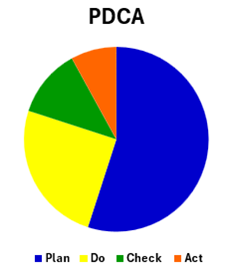
The Plan Do Check Act cycle is a great way to manage any audit
It really happened 01
I worked at a place where I convinced the general manager, internal audits can bring value, and she agreed to support the process. Training was booked, reviews were conducted with the collective internal audit team, findings were chased.
She loved it. In fact, she loved it so much, it was one of her agenda items when customers visited. The customers loved it too. A supportive general manager.
It really happened 02
During an internal audit of a group of processes, their collective objective of reducing defects was assessed. For 3 months the target was consistently missed. No actions could be found, and their own procedures expected a plan of improvement. After a nonconformity was generated, the root cause and corrective action highlighted a lack of analysis and when the process improvement actions were addressed, a significant saving was recognised.
The last word
The internal audit process can be a beautiful thing and is a fantastic opportunity to change what we do, for the better.
I am happy to answer any questions. Use LinkedIn through replies to posts or direct contact.
Alan Carr, has carried out hundreds of value adding internal audits, and still caries out, actual internal audits, today.