CS01 Customer Complaint Reduction Plan
CS01 Customer Complaint Reduction Plan
Nylacast, UK based client designs and produces its own polymers, selling them in various basic shapes such as rods, tubes and sheets. They also use these polymers to manufacture components to customer specifications and drawings for a range of industries, including yellow goods, automotive and marine.
Nylacast was having issues with customer complaints. The same problems seemed to come back, and problem resolution was taking too long. In most cases, solutions were ineffective with the ‘corrective actions’, or ‘fixes’, unravelling themselves, almost instantly. Long term customers were becoming disgruntled with the perceived lack of effort in preventing recurrence of these concerns.
The company turned to CQual, and after a few calls and an onsite meeting, we began to understand the scale of the task. Looking at a customer complaint the ‘corrective action’ was described as ‘remind operators of work instructions’. We pointed out the obvious weakness of that as an action. We looked at another customer complaint. This had a similar recurring problem but with an identically worded ‘corrective action’. A third complaint revealed the same.
At this stage we have to begin to work out why the responses aren’t more robust.
Is top management supportive? Is there a logical process to follow? Is there a lack of effort in actually working out what to do? Are problem solving roles properly understood? Are multi disciplined teams in place and is there good team participation? Is there a lack of technical or problem solving skills? Are root causes properly investigated? Are actions clear, defined and backed up by actions with clear time bound responsibilities? How do communication channels work, if they exist at all? Are there any strong minded individuals that think they know the answers and don’t let teams breathe? This is very challenging, particularly when these individuals are senior managers. Are there any personalities that struggle to agree on common lines of enquiry and resolution? Are there plans to measure success? If a fix is ever effective, are there plans to promote success and share improvements with others processes?
The proposal was a round of training for key personnel, backed up with a plan that would sustain gains, with senior managers being involved in the training to give support and traction.
We would use real problems in training so individuals could apply new skills directly to their areas of interest.
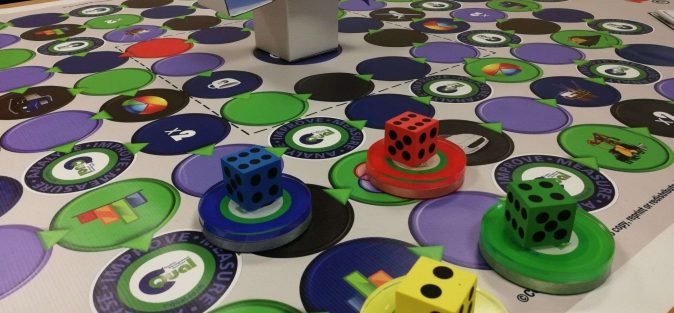
In a 2 day training program, CQual designed workshops formed most of day 1 and day 2 focussed on using some of the tools on real problems. (At CQual we prefer this approach as pre-written case studies are rarely as effective).

To start, CQual ran 3 sessions, each with 8 personnel. This included 5 senior managers, dispersed throughout the groups. Some theories and models proved challenging at times. For example ‘Don’t blame the operator’ was met with some concern, but we explained that operators need a good process to follow and if the process is not defined and operators are not competent, mistakes are highly likely as they become distracted, forgetful or tired. On day 2 we invited process owners and operators to help with nonconformities that had been identified in and around their processes.
It’s a critical element of good problem solving, ‘engaging operators’. Without it, failure is certain.
In the training we make it very clear. If the problem description is weak or misleading, the cause will likely be misdiagnosed. Then in if the cause is misdiagnosed, the corrective actions are going to miss the target. If the proposed actions miss the target, the problem isn’t solved and occurs again. That line of investigation is critical to success. It’s like 5-why for problem solving.
The problem reoccurred.
Why?
Because the Corrective Action was weak.
Why?
Because robust solutions weren’t proposed.
Why?
Because the Root Cause wasn’t clearly defined.
Why?
Because the problem wasn’t described accurately.
Why?
Lack of problem solving skills / detailed investigation.
Why?
After training, we held monthly reviews of nonconformities during feedback sessions, to keep the program on track. CQual facilitated, and reported on the sessions as problem solving teams presented their findings. The responses were good but mixed at first until the teams found their feet and began driving some occasionally detailed investigations. Where nonconformity forms had previously stated ‘remind operators of work instructions’, process owners now engaged operators, and looked in detail at likely or known root causes. In some cases simple but effective corrective action(s) resolved the issues. We charted complaints over the next 6 months and saw a near 50% reduction.
But the most valuable, eye opening and rewarding metric of all, was the ‘problem reoccurrence chart’. The company had always monitored repeat occurrence. These were counted when a known problem resurfaced. Usually because a ‘fix’ was ineffective. In 6 consecutive months there were zero repeat concerns. This proved the fixes were now robust.
Nylacast continues to drive improvement and CQual is invited from time to time to deliver training to new employees.
Contact CQual today and let us take the complexity out of quality.